
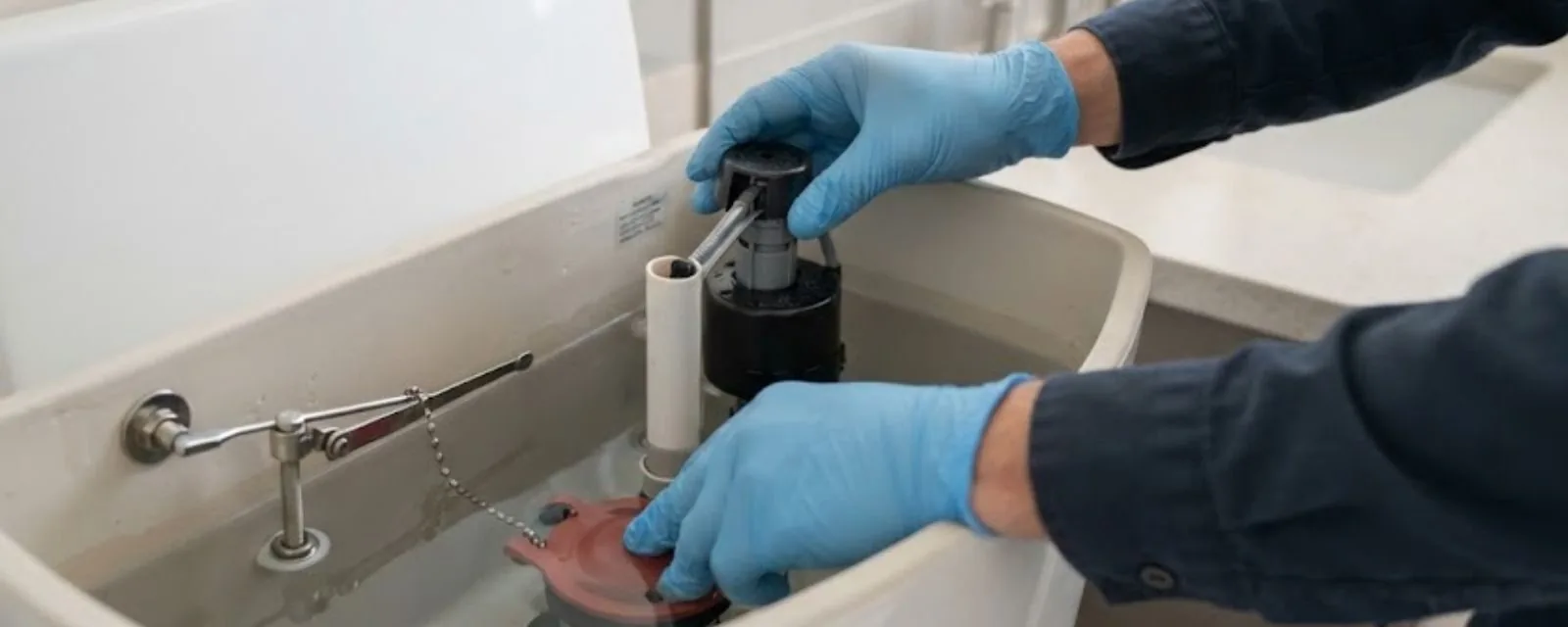
When a toilet is clogged and the bowl is rising, stop flushing. Lift the tank lid and push the flapper down, or close the stop valve on the wall behind the toilet by turning it clockwise. That keeps the water from reaching the rim while you work.
Most single-toilet clogs sit in the toilet's own built-in trap, a curved passage inside the porcelain. A flange plunger and a closet auger handle nearly all of them. This guide covers both tools, what to keep out of the bowl, and how to tell a simple clog from a main line problem that needs a plumber.
How to plunge a clogged toilet so it actually works
Technique matters more than force. Most failed plunging comes from the wrong plunger or a poor seal.
- 1
Pick a flange plunger
A flange plunger has a soft rubber sleeve that folds out of the cup. That sleeve fits into the toilet outlet. The flat cup plungers sold for sinks seal poorly on a toilet.
- 2
Check the water level
If the bowl is nearly empty, add water until the cup is covered. If it is about to overflow, scoop some out into a bucket first. Water is what moves the clog, not air.
- 3
Seat it and push gently
Lower the plunger at an angle so it fills with water, not air. Press down slowly once to push the air out, then start the strokes. A hard first push splashes dirty water on the floor.
- 4
Pull as hard as you push
Work 15 to 20 steady strokes, keeping the seal. The pull stroke often does the real work because it draws the clog back before it breaks loose.
- 5
Test with a small flush
When the water drops quickly, add a bucket of water to the bowl instead of flushing. If the bowl drains well, the clog is gone. If not, move to the auger.
Why the toilet clogged in the first place
Federal rules set the maximum flush volume for new toilets at 1.6 gallons per flush, and EPA WaterSense toilets use 1.28 gallons or less. That is enough water to move waste but not much extra to push a mistake through. A bulky wad of paper, a wipe, or too much paper at once can stall in the trap.
Wipes labeled flushable are a frequent cause. They do not break up like toilet paper and they collect in the bend behind the bowl.
Using a closet auger when the plunger fails
A closet auger (also called a toilet auger) is a short steel cable inside a rigid tube with a rubber boot on the end. The boot protects the porcelain while the cable goes through the trap.
Pull the cable back, set the curved end in the bowl outlet, and crank the handle clockwise while pushing gently. When you feel resistance, keep cranking so the tip hooks or breaks the clog. Pull the cable out slowly, wipe it, and flush a bucket of water to test.
Do not force it if the cable stops hard. A solid stop can mean a toy, a hard object, or a clog beyond the toilet itself. A standard handheld drain snake pushed into a toilet can scratch the porcelain, so keep to the closet auger.
Ready to book?Call and we will find the earliest slot, often the same day when the schedule allows.
Call (855) 575-2890What to put down a clogged toilet, and what to keep out
Quick decisions for the first ten minutes:
| Item | Safe to use? | Why |
|---|---|---|
| Flange plunger | Yes | Moves the clog with water pressure and does not harm the porcelain. |
| Closet auger | Yes | Rubber boot protects the bowl, cable reaches the trap bend. |
| Hot (not boiling) water and dish soap | Sometimes | Soap lubricates a paper clog. Boiling water can crack porcelain. |
| Chemical drain opener | No | Sits in a full bowl and burns skin and eyes on splashback. |
| Bleach plus another cleaner | No | Mixing cleaners can release toxic fumes. |
If you used a chemical product already, tell the plumber before they put hands or a camera into the bowl.
When one clogged toilet is really a main line problem
The toilet sits at the end of the branch line, so it is the first place a deeper blockage shows up. If the bowl clears but the tub gurgles, the shower drains slowly, or a sink bubbles when you flush, the clog is probably downstream in the main drain.
A telling test: run the washing machine drain or a bathtub full of water and watch the toilet. If the water level in the bowl rises or bubbles, the water is looking for another way out. That points to the main line, not the toilet.
Main line clogs come from roots, grease, wipes, or a collapsed or offset section of pipe. A plunger cannot fix any of them. Drain cleaning with a cable machine usually clears a soft blockage, and a camera shows whether the pipe itself is damaged.
Before you call a plumber, check these
Ten minutes on this list saves a diagnostic trip, and it gives the plumber useful facts.
- Close the toilet's stop valve if the bowl is rising.
- Note which other fixtures gurgle, drain slowly, or back up when you flush.
- Look outside for a cleanout cap near the foundation, and note if it is wet or standing water is in the yard.
- Keep towels and a bucket handy. Do not run the washer or dishwasher until the line is clear.
Do not open a cleanout cap if water is standing behind it.
When this becomes an emergency
Treat it as urgent when sewage is coming up in a tub or shower, when water is spilling across the floor, or when every drain in the house is backed up. Stop using water, keep children and pets out of the area, and keep power off to wet outlets. Our crew handles these after hours through emergency drain cleaning, and we serve homeowners in Goose Creek and North Charleston too.
How a plumber approaches a stubborn toilet clog
A plumber starts by checking whether the clog is in the toilet or the line, using the same fixture test described above. If it is in the toilet, they use a toilet-rated auger and sometimes pull the toilet off the flange to clear the outlet from below. If it is in the line, they run a cable machine through a cleanout or the toilet flange. Our toilet repair visits also check the flange and seal.
Pulling a toilet means a new wax or foam seal on reinstall. Cost depends on access, how far the clog sits, whether a camera is needed, and whether the toilet must be pulled. We give a clear price before work starts.
Stopping the next clog
Put only toilet paper and human waste in the bowl, and in smaller amounts per flush. Keep a lidded trash can in every bathroom so wipes and floss have somewhere else to go. A flapper that closes early gives a weak flush, and a plumber can adjust that.
A toilet that clogs repeatedly with no obvious cause deserves a camera look. Many Hanahan homes date from the 1970s growth, so their buried drains are now roughly 45 to 55 years old.
Hanahan local note: which number to call for a backup
The City of Hanahan Public Works page lists Berkeley County Sanitation for sewer issues and Charleston Water System for water. That split matters at 11 p.m. If sewage is coming up inside your home from a single toilet or a fixture, the problem is usually your private line and a plumber is who you call.
If sewage is surfacing in the street or yard near the public manhole, or the neighbors have the same backup, the public sewer may be the cause. In that case call the sewer provider listed by the City, Berkeley County Sanitation at (843) 572-4400. Confirm which utility serves your street, since service areas can differ.
For water, such as a main break or discolored water, Charleston Water System is at (843) 727-6800. The City lists CWS for water and Berkeley County Sanitation for sewer issues. If you cannot tell which it is, call us and we will tell you what the symptoms suggest.
- Sources checked (City of Hanahan Public Works page, federal agency (EPA WaterSense), state licensing board (SC LLR))
- City of Hanahan, Public Works, Important Phone Numbers
- EPA WaterSense residential toilets
- SC LLR Residential Builders Commission
Frequently asked questions
Can I use a regular sink plunger on a toilet?
You can try, but a flange plunger seals the toilet outlet far better. The cup type spreads pressure around the bowl instead of pushing it into the trap, so results are poor.
Is it safe to pour a chemical drain opener into a clogged toilet?
No. In a toilet the chemical sits in standing water, and splashback can burn your skin and eyes. Poison control reports that corrosive drain cleaners can cause serious burns. A plunger or closet auger is safer and works better on a toilet.
Why is my toilet clogged again right after plunging?
The first plunge may only have moved the clog to a narrower spot. Try the closet auger, and look at what else is gurgling. Repeat clogs with no clear cause often mean a main line issue.
Should I call Berkeley County Sanitation or a plumber for a sewage backup in Hanahan?
If the backup is inside your home from one fixture, start with a plumber for your own line. If sewage is surfacing in the street or several neighbors are affected, call the sewer provider the City lists, Berkeley County Sanitation. Confirm who serves your street first.
Do I need a permit to replace a toilet or clear a clog?
Clearing a clog normally does not involve permit questions, but replacing fixtures or lines may. Ask the City of Hanahan Building and Codes department, and verify any plumber you hire with the SC LLR Residential Builders Commission.