
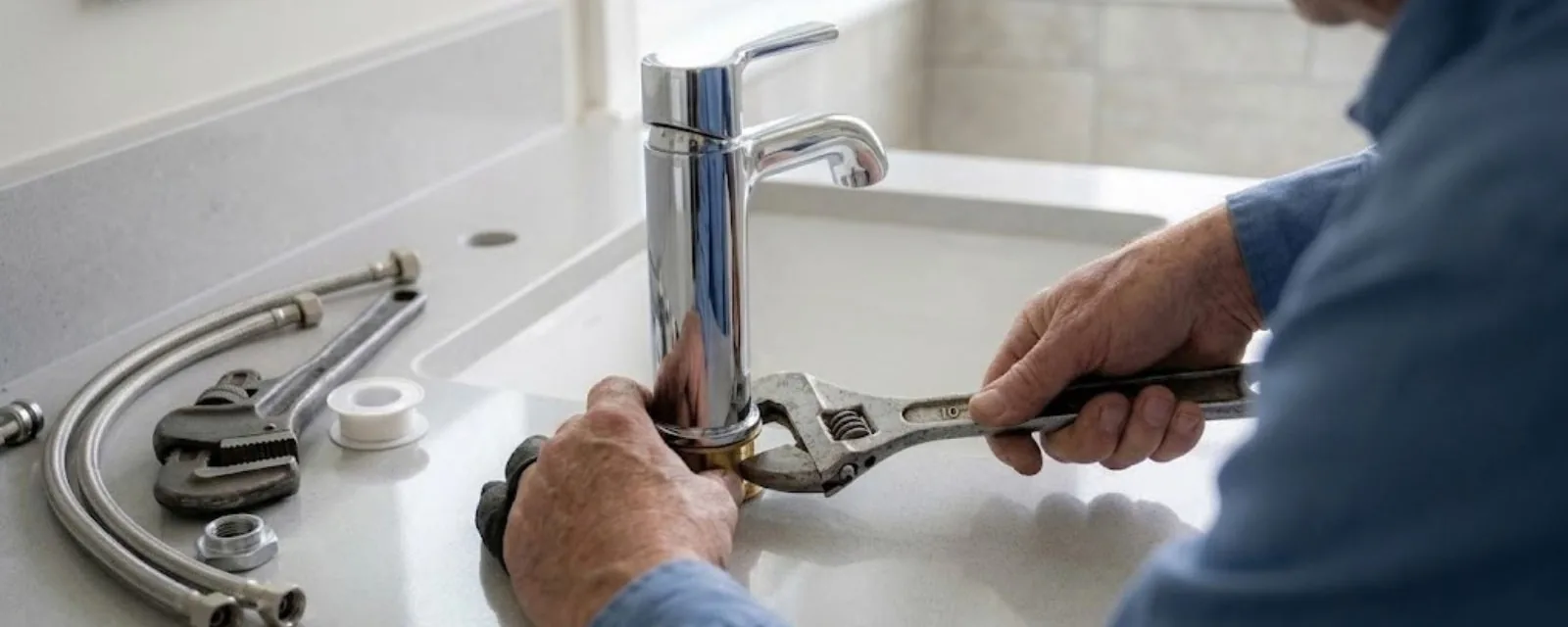
Faucet and sink repair means fixing the parts that control water at a fixture: cartridges, seats, stems, supply stops and the lines that feed them. When one of those parts fails, you get anything from a slow drip to a stream under the sink.
If water is escaping now, look under the sink for the two small oval valves, one for hot and one for cold. Turn each clockwise until it stops. If they will not close or are the part that is leaking, shut the main water valve and call us.
Why faucets fail here even though the water is soft
Charleston Water System reports moderately soft water, an average of 3.4 grains per gallon, so Hanahan faucets rarely choke on thick mineral crust the way they do in hard-water towns. That changes what we suspect first. When a faucet drips, sputters or stiffens, the usual culprits are worn cartridges, scored valve seats, dried O-rings and old supply stops, not a clogged aerator.
Aerators still catch loose sediment after water main work or plumbing repairs nearby. If the stream is weak on one fixture only, unscrew the tip and rinse it. If both hot and cold are weak, or the problem follows you from sink to sink, the cause is not the faucet.
Water spraying under a sink: what to do right now
Treat a spraying or flooding fixture as urgent. The steps are quick.
Close the two stop valves
Turn the hot and cold oval valves under the sink clockwise until they stop. Do it by hand. A wrench on an old valve can snap the stem.
Close the main if they fail
If a stop valve is the leaking part or will not turn, close the main shutoff where the line enters the house.
Open the faucet to drain the line
With the water off, open the faucet to bleed pressure out of the pipes. A dripping line stops dripping sooner.
Empty the cabinet
Move cleaners and stored items out, lay towels, and set a bucket under the leak. Wet particleboard swells quickly.
Mind the electricity
Keep outlets, disposals and power strips dry. Switch the breaker off only if you can reach the panel while standing on dry ground, otherwise stay out and call 911 or the electric utility.
Faucet, valve and fixture repair: what actually gets replaced
Most faucet jobs come down to one inner part. Single-handle faucets use a cartridge or a ball assembly, ceramic disc models use a sealed disc cartridge, and older two-handle faucets use rubber washers against a brass seat. We identify the brand and model, pull the handle and check the part that matches the symptom before we recommend anything.
A drip from the spout usually means a worn cartridge or seat. Water around the base of the handle means O-rings. A faucet that wobbles in the sink has a loose mounting nut or corroded supply connections underneath. Low flow on one side only often points to a partly closed or failing stop valve.
Kitchen sinks
Pull-down hoses and sprayers add weight checks and extra connections. A sprayer that leaks at the hose base or a spout that spins loose can often be fixed without replacing the whole faucet.
Bathroom lavatories
Small bathroom faucets often use plastic or thin brass parts that wear faster. If replacement cartridges are no longer made for an older faucet, replacing the faucet is the cleaner answer and we explain why before we proceed.
Water or sewage problem right now?Call the 24/7 line. A licensed plumber, a clear price before work starts.
Call (855) 575-2890Faucet type, usual failing part and the repair
Matching the symptom to the part keeps the repair short.
| Faucet style | Typical failing part | Repair |
|---|---|---|
| Single-handle cartridge | Cartridge or O-rings | Replace cartridge and O-rings, check the valve body |
| Ball-type single handle | Springs, seats and ball | Replace the repair kit or the whole faucet if the body is worn |
| Ceramic disc | Disc cartridge seals | Replace cartridge and check inlet seals |
| Two-handle compression | Rubber washers and seats | Replace washers and dress or replace the seat |
| Pull-down kitchen faucet | Hose, weight or spray head | Replace hose or head, check connections underneath |
| Tub and shower valve | Cartridge behind the wall plate | Replace cartridge, access through trim or wall |
Cartridges are specific to a brand and series. A plumber who reads the model before arriving saves a second trip.
A burst or broken supply valve under the sink
The little stop valves under sinks and behind toilets sit untouched for years. They corrode inside, weep at the stem, and sometimes snap when someone finally turns one. The braided lines on top of them can split at the crimp or burst near the fitting.
When a valve or line fails, the water comes from the fixture's own supply, so closing both stops usually ends it. If the stop itself is the broken part, the main shutoff is the only way to stop it, and that is the time to call us rather than wait until morning.
We replace the stop valve and the supply line together, using quarter-turn valves that are easier to close next time. On older copper or galvanized stub-outs, the valve may not thread on cleanly, and the stub-out has to be cut back first. If water has entered the cabinet or a wall, we check the base and the wall behind it for moisture before we leave.
If a pipe in the wall rather than the fixture line has split, that is a different job, and burst pipe repair covers it.
How a cartridge or seat repair goes
The sequence is short when the part is identified first.
- 1
Shut off and relieve pressure
Close the stops under the sink, then open the faucet to empty the line.
- 2
Identify the faucet
We read the brand and model from the handle, the spout or a tag on the supply and match the cartridge.
- 3
Remove and inspect
Handle, trim and retaining nut come off. The old cartridge, O-rings and seat tell us what failed.
- 4
Replace and clean
New cartridge or seals go in, and the valve body is cleaned of grit before we reassemble.
- 5
Test hot, cold and under the sink
We run both temperatures, check the stops and supply lines for weeping, and tighten what needs it.
Shower, tub and showerhead problems, one at a time
These come up often enough to warrant their own notes.
Tub or shower drain that backs up
Standing water around your ankles usually means hair and soap packed into the trap or the pop-up stopper. Lift the stopper or strainer and clear what you can by hand. If other fixtures gurgle at the same time, the clog is further down the line and drain cleaning is the right call.
Shower valve or showerhead that leaks
A showerhead that drips after you shut it off often needs only a new washer or a tightened connection. Water that keeps running from the head, or hot and cold that mix badly, points to the cartridge behind the wall plate. A damp wall or stained ceiling below the shower means the problem is behind the tile.
Bathtub faucet that drips or will not shut off
Tub spouts that run after the valve closes usually have a worn cartridge or seat. A diverter that lets water leak out of the spout while the shower runs is a separate part that can be replaced on its own.
Everyday faucet repair
Drips, wobble, stiff handles and slow flow are small jobs when the faucet is sound. If a repair would cost most of the price of a new faucet, replacement usually wins and we say so.
If only the hot water is weak or dripping, check whether the problem is at the faucet or at the water heater before you buy parts. Water heater repair covers pressure and temperature problems that show up at the tap.
What to gather before we arrive
Quick notes make the visit faster.
- Photograph the faucet, any brand name on the handle and the area under the sink.
- Note which side leaks: hot, cold, spout or base.
- Write down the stop valve behavior: does it turn, weep or stay stuck?
- Empty the cabinet and clear a work area.
- Take a photo of any water stains on the wall or floor.
- Keep the old faucet packaging or manual if you still have it.
For insurance, photograph water damage before cleanup and keep the removed parts.
What affects the price of a faucet or sink repair
We do not publish prices on a web page. These factors set the number.
- Repair or replace
- A cartridge or seat is a small repair. A corroded valve body or a faucet with no available parts often costs less to replace.
- Parts and brand
- Name-brand cartridges and single-source parts cost more than generic ones. Matching the model matters.
- Stops and supply lines
- Replacing old stop valves and lines is extra work, but it prevents the next call.
- Access
- Tub and shower valves can need wall or tile access. Under-sink repairs in tight cabinets take longer.
- Timing
- After-hours and same-day work follow different scheduling and rates than a planned visit.
Insurance may cover sudden water damage from a burst supply line but usually not the worn faucet itself. Ask your carrier and photograph everything first.
Call with what you see and we will give a clear price before work starts.
Frequently asked questions
Do you handle faucet and sink emergencies at night or on weekends in Hanahan?
Yes. Dispatch runs 24/7 and a spraying faucet or broken supply valve is exactly the kind of call we take after hours. Same-day appointments are offered when available for drips and valves that can wait.
Close both stop valves under the sink and call.
Why is my water pressure low at just one faucet?
One fixture with weak flow usually means a clogged aerator, a partly closed stop valve or a worn cartridge. Rinse the aerator first and check that the stop under the sink is fully open.
Can I replace a faucet cartridge myself?
Often, yes, if you can turn the water off at the stops and match the brand and model exactly. The risks are a seized stop valve and a mismatched cartridge. If either happens, stop and call so you do not turn a drip into a flood.
My shower handle will not shut off all the way. What now?
The cartridge behind the handle is probably worn. Turn the water off at the main if you cannot stop it, and call. Waiting often lets the seat score, which makes the repair bigger.
Is a leaking faucet worth fixing?
A single drip wastes water every day, and the leak often grows. Cartridge and seat repairs are small jobs, so fixing it early is usually cheaper than waiting for a part to fail completely.
Do you serve North Charleston as well?
Yes. We serve North Charleston as well as Hanahan, and we ask for your address when you call.
How do I find out if my plumber is licensed?
South Carolina Residential Builders Commission, part of LLR, licenses residential plumbing contractors. Look up any plumber with LLR before work starts.