
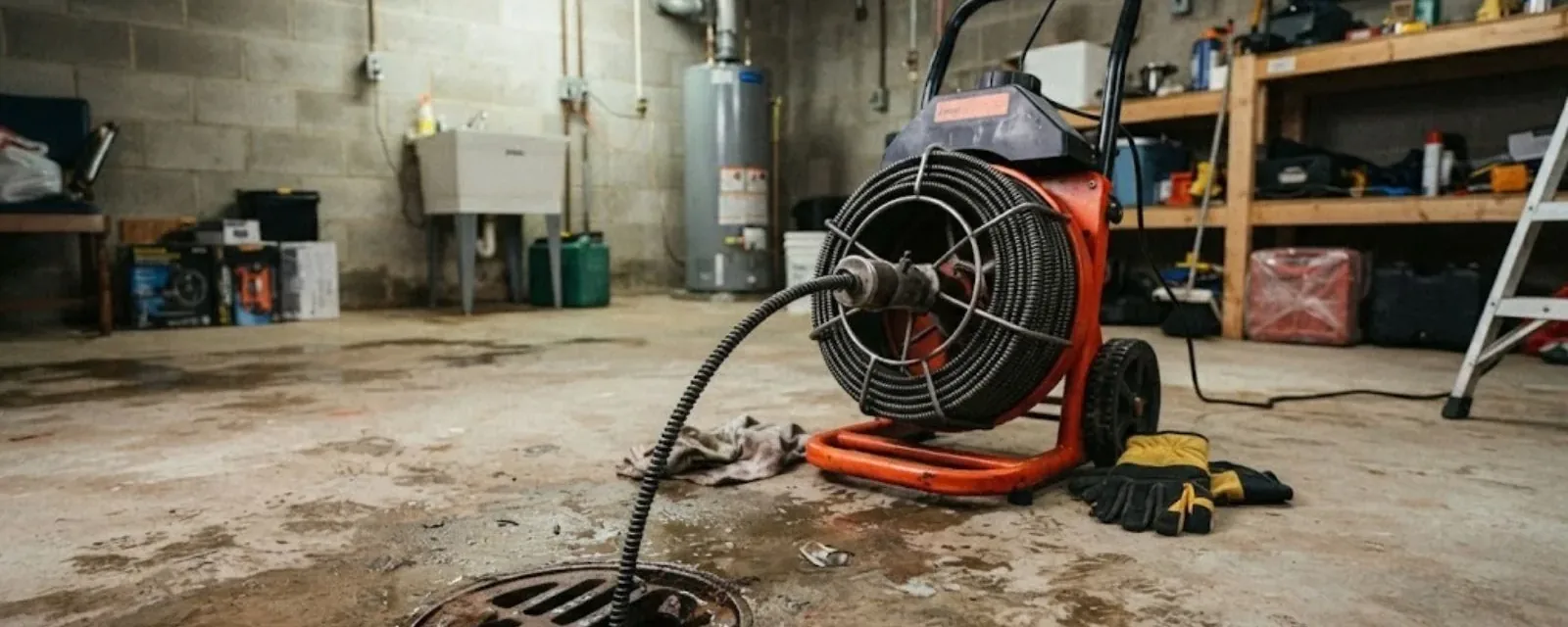
Drain cleaning means removing a blockage from a fixture drain or branch line so water moves again. If water is rising, stop using every fixture in the house and call, because our 24/7 dispatch reaches licensed plumbers at any hour. The steps below cover what to do while you wait.
The first job on any visit is finding where the clog sits. One stopped sink is a different problem from three fixtures backing up together, and the tool, the time and the cost change with the answer.
Slow drains, gurgling and standing water: how a clog shows up
A drain rarely fails all at once. First comes a sink that empties slowly or a tub that leaves a gray ring. Then you hear gurgling after a flush, or the toilet bubbles when the washing machine drains.
Those sounds are air pulled through a partly blocked line. A full blockage looks like water that sits and does not move, or a sewer smell from a floor drain. When one fixture is slow, the clog is usually in that fixture's own branch. When two or more act up together, the blockage is further downstream and a sink plunger will not reach it.
What you can safely try first
A cup plunger on a sink or tub and a flange plunger on a toilet clear many simple clogs. Seal the overflow opening with a wet rag, then push down slowly and pull up sharply a dozen or so times.
A small hand auger from a hardware store can reach a trap clog. Stop if the cable meets hard resistance or the water stays still after two tries, because forcing it can scratch a pipe or pack the clog tighter.
Clogged drain right now: what to do first
These steps limit the mess until a plumber arrives.
Stop sending water down
Pause the dishwasher, washing machine and showers. Every gallon you add goes to the lowest open drain in the house.
Keep chemical openers out of it
Lye and acid products sit in a standing clog and can splash onto a plumber's hands or eyes. If you already poured one in, tell us when we answer.
Check where else it shows
Look at the tub, the floor drain and the farthest sink for bubbling or rising water. Several fixtures reacting at once means a shared line is blocked.
Find your cleanout
It is a capped pipe, usually near the foundation or in a crawlspace. Note where it is, but leave the cap on if sewage is pushing up.
Lift things off the floor
Move rugs, boxes and electronics away from the lowest drain before it overflows.
Rivers Avenue to the side streets: your clog or the sewer's?
Rivers Avenue (US-52) is Hanahan's main commercial strip, and the homes and small businesses on either side of it face the same question when a drain backs up. Is the blockage inside your own building line, or out in the public sewer? The City's Public Works page lists Berkeley County Sanitation for sewer issues and Charleston Water System for water, so confirm which utility serves your street before you assume.
A quick sort helps. A clog in one fixture or one bathroom is inside your plumbing, and that is ours to clear. Every fixture backing up at once, especially the lowest tub or a floor drain, points to the main building drain or beyond. If neighbors on your street have the same trouble at the same time, call the sewer provider as well.
The sewer provider can differ in Goose Creek and North Charleston, so confirm with your own utility. When the stoppage sits between your cleanout and the street, we can clear and camera your side, and our sewer line cleaning page explains how.
Water or sewage problem right now?Call the 24/7 line. A licensed plumber, a clear price before work starts.
Call (855) 575-2890Hand auger, snake, cable and jet: which one fits
Plumbers use different tools for different clogs. This is how they compare.
| Tool | How it works | Fits best | Limits |
|---|---|---|---|
| Hand auger | A short coiled cable turned by hand through a trap or fixture drain | Sink, tub and shower clogs a few feet from the drain | Short reach, cannot clear grease-lined or root-filled lines |
| Drum machine (snaking) | A motor turns a thin cable on a spool, and the head breaks through or hooks the clog | Branch lines in the 1.5 to 3 inch range with hair, paper or soft debris | Opens a channel but leaves the coating on the pipe wall |
| Large cable machine (cabling) | Heavier, stiffer cable with cutter heads goes down the main line | Main building drain, roots, packed buildup | Cutter heads can scratch old pipe, needs a cleanout |
| Hydro jetting | High-pressure water from a nozzle scours the whole pipe wall | Grease, sludge, soap film, fine roots, repeat clogs | Not for broken or collapsed pipe, camera first |
Drain snaking and cabling: what the machine actually does
People say snaking and cabling for the same job, but the tools differ in weight. A drum machine carries thin cable on a spool, and the head at the end breaks through a clog or hooks it so we can pull it back. A larger cable machine pushes stiffer cable with blades down a 3 or 4 inch line to cut through roots and packed debris.
The cable's weakness is what it leaves behind. It opens a channel the width of the head, but grease and sludge on the pipe wall stay put, and the line can narrow again in weeks. If a line has been snaked and slowed down again, that history points to hydro jetting. Roots are similar: cabling clears the stoppage, but they grow back unless the entry point is repaired.
Kitchen sink clogs: where grease, rice and coffee grounds collect
A kitchen drain carries the worst mix in the house: cooking fat, starchy food and soap. Fat cools inside the pipe and coats the wall, and bits of rice, pasta and coffee grounds stick to it. Over months the opening shrinks until water pools in the basin.
Look under the sink first. The curved P-trap holds a little water to block sewer gas, and it is also where heavy debris settles. With a bucket underneath, a slip-nut trap can be unscrewed by hand and emptied. If the trap is clear and the sink still holds water, the clog is in the wall line behind it, and that needs a machine.
A garbage disposal adds another bend and a second path for debris. If the unit hums or water rises in the other basin, the cause may be the disposal itself, and garbage disposal repair covers that case.
Drains tend to fail when the house is full. Our dispatch runs 24/7 and we take same-day appointments when available, so we take weekend backup calls.
What happens when we arrive
Here is the usual order of a drain cleaning visit.
- 1
Trace the symptom
We ask which fixtures are slow, gurgling or full, then test them to see which share a line.
- 2
Pick the access point
We use the trap, a cleanout or a fixture connection. Pulling a toilet to reach a line is a last resort.
- 3
Clear the blockage
A hand tool or drum machine goes in first, and we feed cable until the head breaks through.
- 4
Flush and test
We run water for several minutes and watch every fixture on that line to confirm it holds.
- 5
Say what comes next
If grease or roots lined the pipe, or the clog is a repeat, we explain whether jetting or a camera look is the sensible next step.
Before the plumber arrives: clear access and record the damage
A few minutes of preparation saves time and helps with any insurance claim.
- Clear the area around the sink, tub or cleanout so a drain machine can be set up.
- Note which fixtures are slow and which are gurgling, and when it started.
- Write down what went down the drain recently, such as wipes, grease or a child's toy.
- Photograph standing water and any damaged floors, cabinets or belongings.
- Clear plants or stored items off the cleanout cap.
- Keep children and pets away from standing water, since backed-up drain water can carry bacteria.
Do not run the washing machine to see if the drain has cleared on its own. Each cycle adds several gallons to a line that is already full.
When the drain line itself leaks
Sometimes the clog is a symptom of a drain line leak. Cast iron drain lines corrode from the inside with age, and a cracked joint lets water seep into soil or slab while debris snags on the rough edge. Signs include a damp spot, a sewer odor in one room, or a line that keeps clogging at the same place.
A camera shows the break before anyone digs, and our sewer camera inspection page explains what that visit involves.
What affects the price of drain cleaning
We do not quote prices on a web page, because the clog decides the work. These are the factors that move a price.
- Where the clog sits
- A trap is quick. A blockage deep in the main line takes more cable, more time and sometimes a second access point.
- What it takes to clear
- A hand tool is a smaller job than a large cable machine. Jetting adds equipment and water use and is priced as its own service.
- Time of day
- After-hours and weekend calls involve dispatch outside normal hours. We give a clear price before work starts.
- Access
- A cleanout keeps the job simple. If we must pull a toilet or reach a line through a wall, labor goes up.
- Repeat clogs
- Clearing the same stoppage again and again costs more over a year than finding out why it returns.
Homeowner policies generally do not pay to clear a clog caused by normal use. Damage from a sudden sewer or drain backup is often covered only with an added endorsement, so ask your carrier and keep your photos.
Describe what you are seeing and we will explain what a clear price covers before any work begins.
Frequently asked questions
Do you handle Drain Cleaning emergencies at night or on weekends in Hanahan?
Yes. Our dispatch runs 24/7 and licensed plumbers take same-day appointments when available, including nights and weekends. If water is rising, stop using fixtures and call.
Why does my drain keep clogging after I clear it?
Usually the cause is still on the pipe wall. Grease and soap film narrow a line after a cable opens a small channel, and roots can re-grow from the same joint. A repeat clog is a reason to ask about jetting or a camera look.
Are liquid drain cleaners safe to use before calling?
We advise against them. They sit in a standing clog, can splash during plunging or snaking, and do little against grease or hair. If you already used one, tell the plumber.
How do I know whether the clog is in the main line?
Look for more than one fixture reacting. Gurgling in the tub when the sink drains, or water showing in a floor drain, means a shared line is restricted. A cleanout with standing water in it points the same way.
Can snaking damage my pipes?
It can, if the wrong tool meets weak pipe. Old cast iron that has corroded inside can be scratched or cracked by a heavy cutter head. That is why we start with the lightest tool and tell you when a camera should look first.