
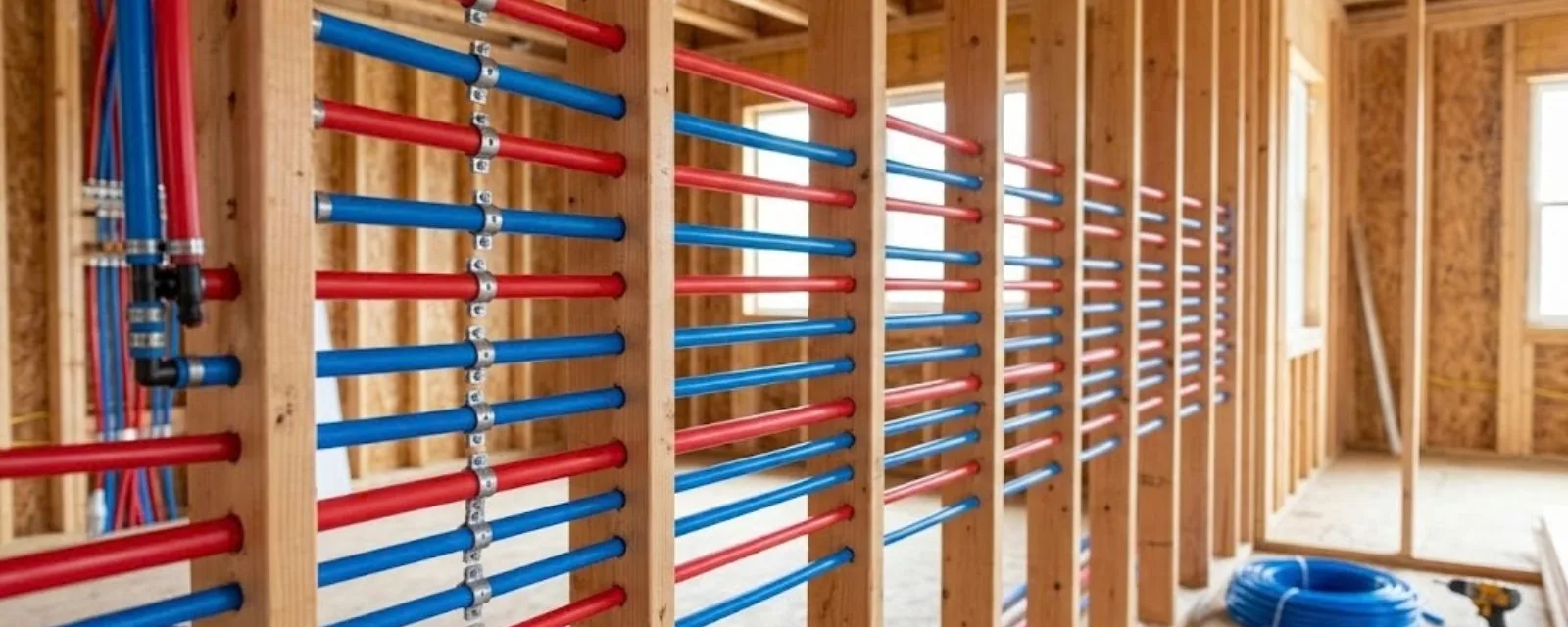
Repiping means removing worn supply pipe and installing new copper, PEX or CPVC in its place. It deals with the pipes that carry pressurized water to your fixtures, not the drains that carry waste out.
It is a big job with a real impact on your walls, so it should come after a diagnosis, not before one. The first step is a plumber looking at what you have and what it is doing.
Hanahan homes from the 1970s are now 45 to 55 years old
According to the SC Encyclopedia, Hanahan grew from 8,376 residents in 1970 to 13,224 in 1980. That means a large share of the homes here went up in the 1970s boom and are now roughly 45 to 55 years old. A house that age can still have its first set of supply pipe, or a partial replacement from some earlier repair.
That does not mean your pipes are bad. It means the age is worth checking, because supply pipe in a home from that period may be galvanized steel, and some homes finished in later decades got polybutylene. We cannot tell from an address which one you have, and neither can anyone else without looking.
Pipe type, fittings and supports on a repipe are covered by the plumbing code South Carolina has adopted, the 2021 International Plumbing Code (IPC) with state modifications. The City of Hanahan lists it on its Building Codes page.
That is one reason a repipe quote should name the material, the fittings and who handles any permit or inspection with the City.
Sources: City of Hanahan, Building Codes and SC LLR, Building Codes in Effect for South Carolina. Checked October 2026.
Check your own supply pipe in about twenty minutes
You can learn a lot without tools.
- 1
Find the main entry
Look where the water line enters the house, usually near the water heater, a utility closet, a crawlspace or under a sink. Note the pipe color and material.
- 2
Read the pipe
Gray, dull steel with threaded joints is galvanized. Gray or blue-gray flexible plastic is polybutylene. Brown-orange metal is copper. Cream or tan rigid plastic is CPVC. Bright red, blue or white flexible tubing is PEX.
- 3
Look at the joints and fittings
Green crust on copper, rust bloom at galvanized threads, or damp stains around any fitting are signs to flag.
- 4
Run a hot and cold test
Open a faucet at the far end of the house and a second one next to it. A big drop in flow when you open both suggests narrowing inside old pipe.
- 5
Check the water color
Fill a clear glass after the water has sat overnight. Brown or orange tint that clears after a minute is worth mentioning to a plumber.
Galvanized and polybutylene pipe: why replacement comes up
Galvanized steel supply pipe is zinc coated steel. The coating wears away, and corrosion builds up on the inside of the pipe, narrowing it year by year. You see this as falling pressure, rusty water on first use and pipes that seem fine on the outside but give out at a joint. Replacement is the usual answer when pressure has dropped across the house.
Polybutylene is gray plastic supply pipe that was widely installed from roughly 1978 to 1995 and is known for failures at its fittings. If your home from that era has it, have a plumber inspect it. Failure can be sudden, so a leak in the wall may show up with little warning.
Not every old pipe needs to come out on a schedule. A plumber looks at pressure, the water, the joints and how many leaks you have had. One repair in a 50-year-old system is a repair. A third pinhole in a year is a pattern.
Ready to book?Call and we will find the earliest slot, often the same day when the schedule allows.
Call (855) 575-2890Pipe materials compared
This compares what plumbers install now with what may already be in your walls.
| Material | How it behaves | Watch for | Where it fits |
|---|---|---|---|
| Copper | Rigid metal, soldered joints, long track record | Pinholes in some water, theft and cost of material | Exposed runs and homes where owners prefer metal |
| PEX | Flexible tubing, fewer joints, easy to route through walls | UV damage if left in sunlight, fittings need correct tools | Whole house jobs where walls must stay mostly intact |
| CPVC | Rigid plastic, glued joints, handles hot water | Brittle with age or impact, needs correct glue and supports | Many retrofit jobs and budget-minded replacements |
| Galvanized steel (existing) | Threaded steel that corrodes inside | Low pressure, rusty water, leaks at joints | Replace, rarely repair beyond a short section |
| Polybutylene (existing) | Gray plastic with crimped fittings | Failure at fittings, sudden leaks | Have it inspected and plan replacement |
The best material is the one your plumber can install correctly in your house. Ask why they recommend it.
Partial repipe or whole house
A partial repipe replaces one section: a bathroom branch, the kitchen run or the line from the meter to the water heater. It makes sense when the problem is limited and the rest of the pipe tests sound. A whole house repipe replaces every supply line and makes sense when the pipe type itself is failing.
A middle path exists. Some houses replace the worst zone now and plan the rest later, and a good plumber should tell you which zones are riskiest. If you are also looking at a slab problem, see slab leak repair before deciding, because rerouting through the attic can be an alternative to opening the floor.
What happens to your walls and drywall
To run new pipe, a plumber has to reach the old runs, and that means access holes. Expect small openings in the drywall near fixtures, in closets and in the ceiling. PEX can be fished through walls with smaller openings, while rigid pipe may need more.
We do not do drywall finishing, texture or paint. We cut as little as the job needs and tell you where openings will be, so you can plan for a drywall contractor to close and finish them. Ask for that list before you agree to the work.
How a repipe is phased
A whole house job usually runs in stages so you are not without water for long.
- 1
Walkthrough and plan
We trace the existing lines, choose the material, mark access points and talk through when water will be off.
- 2
Rough-in
New supply lines are run to each fixture while the old system still works wherever possible.
- 3
Connection and cutover
Water is shut off, the new system is tied to the main, and fixtures are reconnected.
- 4
Pressure test
The new lines are pressure tested for leaks before any wall is closed.
- 5
Cleanup and handoff
Debris is cleared, old pipe is removed and we point out which openings need patching.
When repair is the smarter choice
If the leak is at a single fitting and the rest of the pipe tests fine, repair is cheaper and faster. If the problem is a service line from the meter, water line repair is the job, not a repipe. For an unknown leak, leak detection finds the spot before anyone opens a wall.
Repiping becomes the smarter choice when leaks keep coming back in different places, when pressure falls throughout the house, when the pipe type is known to fail, or when repairs have started to cost more than they save. Ask your plumber to show you the old pipe interior if they cut a section out.
What affects the price of repiping
We do not post prices. These are the real cost drivers.
- Size and layout
- More fixtures, more floors and longer runs mean more pipe and more hours.
- Material
- Copper, PEX and CPVC differ in material cost and labor. The cheapest pipe is not always the cheapest job.
- Access
- Slab-on-grade homes, finished ceilings and tight attics change how much cutting and patching is needed.
- Drywall and finish work
- Opening and closing walls often belongs to a second trade and a second price.
- Permits and inspection
- Ask the City of Hanahan Building and Codes department what applies to your project.
Insurance usually does not pay to replace worn pipe, but it may cover sudden water damage from a failure. Ask your carrier what they cover and photograph any damage before repairs.
Call and describe your house and your symptoms for a clear price before work starts.
A single pinhole leak in a copper line tells you very little. A pattern of leaks, falling pressure and a known risky pipe type tell you a lot. Get the diagnosis first.
Before you sign on for repiping
Ask these of any plumber, including us.
- Which pipe material and why for this house?
- Which walls and ceilings will be opened, and who closes them?
- How long will the water be off on the busiest day?
- What permits or inspections apply? Ask the City of Hanahan Building and Codes department as well.
- Is the plumber licensed? Verify with SC LLR (Residential Builders Commission).
- Is the price written, itemized and clear before work starts?
Homeowners in Ladson and nearby towns ask us the same questions.
Frequently asked questions
How do I know if my house needs repiping?
Falling pressure throughout the house, rusty water that does not clear, repeated pinhole leaks and a known risky pipe type are the main signs. One leak by itself is usually a repair. A plumber inspecting the pipe, the pressure and the leak history gives you a real answer.
Is polybutylene pipe dangerous?
It was widely installed from roughly 1978 to 1995 and has a record of failing at fittings. Failure is not certain in every house, but a home with gray plastic supply pipe from that era should have it inspected.
Will repiping tear up my walls?
It opens some of them. PEX can be routed through smaller openings than rigid pipe. We cut as little as we need and tell you where, but drywall finishing is a separate trade.
Can I stay in the house during a repipe?
Many people do, with water off for part of a day. Ask for the phasing plan first, and have a bathroom plan for the days water is off.
Does repiping fix low water pressure?
It does when the cause is corroded or narrowed supply pipe. It will not fix a pressure problem caused by the utility, a failing regulator or a single clogged fixture, so diagnose first.
Does your repiping work need a permit?
Ask the City of Hanahan Building and Codes department. We will describe the scope in writing so you can ask accurately.
Is repiping an emergency?
Usually not, but a failed pipe is. If water is escaping, shut the main and call our 24/7 line. Planned repiping can be scheduled once the leak is stopped.