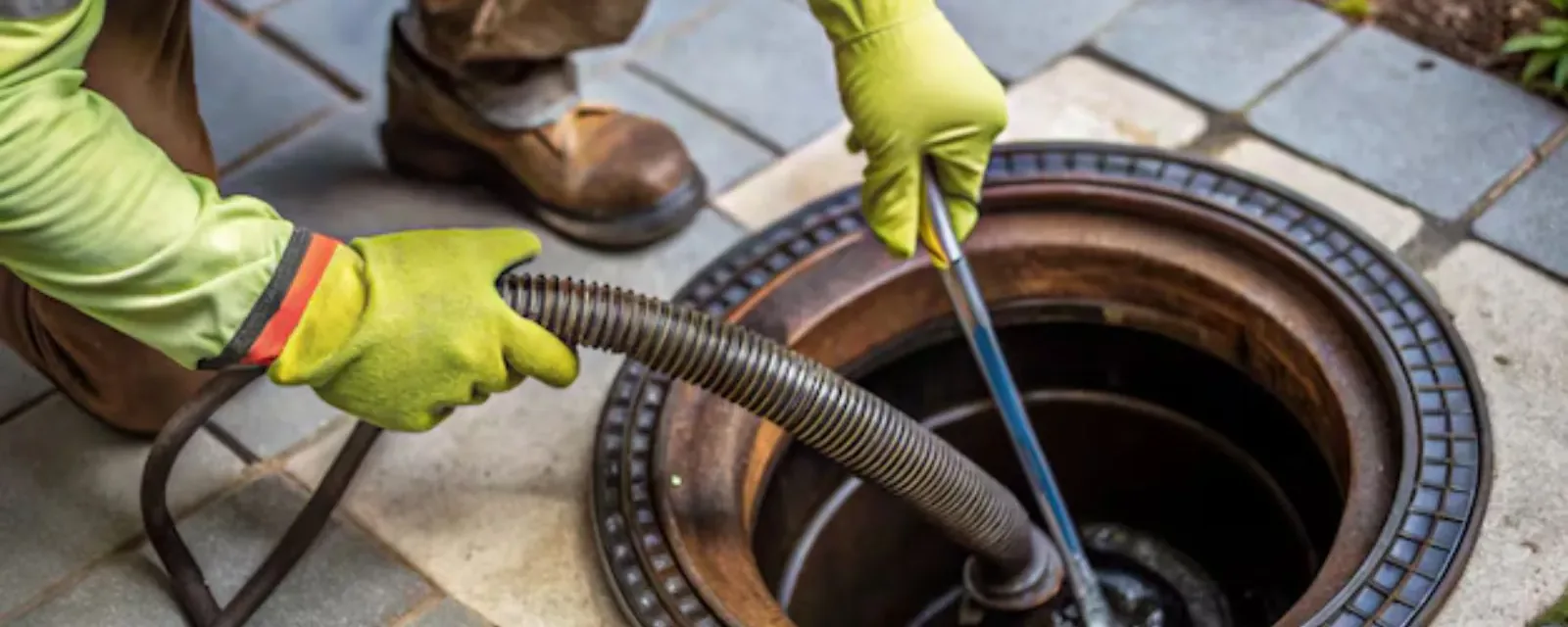
Hydro jetting is the use of high-pressure water through a specialized nozzle to scour the inside of a drain or sewer line. If a line is backing up now, stop running water, keep people away from standing wastewater, and call. Our dispatch is 24/7, and a licensed plumber can tell you on the phone whether jetting is the right tool or whether something else needs doing first.
Jetting is not the first answer to every clog. It earns its place when grease, soap film or roots keep bringing a blockage back, and it is the wrong choice for pipe that is already broken.
I snaked it and it came back: why a cable is not always enough
A snake punches a hole through a blockage. The channel is about as wide as the cutter head, so a 4 inch line may end up with a 2 inch path through packed grease. Water drains for a few days, then the walls collect more fat and the stoppage returns.
Jetting works differently. Water leaves the nozzle at a set flow and pressure, and the jets angled backward pull the hose forward while scouring the wall. The result is a pipe wall that is actually cleaner, not a hole through a plug.
Roots in the line
Fine roots enter through joints looking for moisture. A cable cuts the part inside the pipe but not the part outside, so the roots re-grow. A rooting nozzle shreds fine hair roots and flushes them out, which usually lasts longer than cabling alone.
Jetting does not close the gap the roots came through. Thick woody roots may need a cutter first, and a camera shows whether the entry point needs repair.
Repeated backups
A line that has backed up more than once in a season is a pattern, not bad luck. A camera look before and after jetting shows whether the cause is buildup, a sag, or a defect in the pipe.
Houses from the 1970s growth and the drain lines inside them
Hanahan's population rose from 8,376 in 1970 to 13,224 in 1980, so many of its houses went up in that decade and are now roughly 45 to 55 years old. Decades of grease, soap and paper leave a coat inside any drain line. If your house is from that era, ask us what your drain lines are made of before anyone jets them.
Cast iron corrodes from the inside with age, and the rough surface catches debris. Jetting clears loose rust and buildup well, but on pipe that is thin, cracked or corroded through, high pressure can open a weak spot. That is why a camera look usually comes first, as described under sewer camera inspection.
Nozzles and pressure: what the water does inside the pipe
The nozzle matters as much as the pressure. This is how the common types differ.
| Nozzle type | What it does | Used for | Watch for |
|---|---|---|---|
| Penetrating (forward jet) | Drives a narrow jet ahead to break through a stoppage | A line that is fully blocked | Cleans little of the wall |
| Cleaning (rear jets) | Angled jets pull the hose forward and scour the wall on the way back | Grease, sludge, soap film | Needs an opening wide enough to enter |
| Rotating | Spins a jet around the pipe's inner surface | Heavy buildup on the wall | Not for damaged pipe |
| Root cutting | A spinning head with a blade or chain shreds roots | Thick roots in a line that is otherwise sound | Can scratch old pipe |
More pressure is not better. Pipe material, size and condition set the limits, and a plumber sets the pressure to match.
Water or sewage problem right now?Call the 24/7 line. A licensed plumber, a clear price before work starts.
Call (855) 575-2890Backed-up line right now: what to do while you wait
Take these steps before a plumber reaches you.
Shut the water use down
Hold off on laundry, showers and dishes. A full line has nowhere to send more water.
Stay out of standing water
Sewage and drain water carry bacteria. Keep children and pets away, and wear rubber gloves and boots if you must step in it.
Locate the cleanout
Jetting hoses enter through a cleanout, so tell us where yours is. Clear plants and stored items off it.
Protect the floor
Put towels along a doorway and move rugs and cardboard boxes from the lowest drain.
Skip the chemicals
Pouring an opener into a standing line makes the work more hazardous. Tell us if you already did.
What hydro jetting cannot fix
Water pressure clears what is inside a pipe. It does not repair the pipe. A collapsed section, a belly where the line sags and holds water, or a separated joint will keep causing stoppages after jetting.
A belly shows on camera as a pool of standing water in the line, and solids settle there every time. The fix is repair or replacement of that section, which our sewer line repair page covers. If a line is too far gone to jet safely, we will say so instead of billing the visit and leaving the problem.
How a jetting job runs
This is the sequence on a typical jetting visit.
- 1
Look before we spray
A camera or a careful read of the symptoms tells us whether the pipe can take jetting.
- 2
Set up at the cleanout
The hose goes in through a cleanout, so no fixtures need to be pulled when one is available.
- 3
Open the line
A penetrating nozzle breaks through any complete blockage so the cleaning nozzle can follow.
- 4
Scour on the pull back
The cleaning nozzle is drawn back slowly while the rear jets strip the wall, and debris flows downstream to the main.
- 5
Check the result
We run the camera again or flush the line with water, and explain anything the pipe revealed.
Signs that jetting is the right call
A plumber should recommend jetting only when the evidence supports it.
- The line was snaked and slowed down again within weeks.
- A camera shows grease or soap film coating the wall.
- The roots are fine and hair-like, not thick and woody.
- The pipe is sound, with no collapse, offset or sag.
- A kitchen line carries a lot of cooking fat, including a small food business, which our commercial plumbing team also sees.
If any of these is missing, ask for a camera look first.
A line that stops overnight does not wait for business hours. Dispatch is 24/7 for Hanahan and nearby towns such as Goose Creek and Ladson. Same-day appointments are offered when available, and jetting is one option we weigh by phone before anyone drives out.
What affects the price of hydro jetting
Jetting is priced to the job, not by the hour on a web page. These factors set the number.
- Line length and size
- A short 3 inch branch is a smaller job than a long run to the main, and larger pipe needs more water and time.
- What is in the pipe
- Light film clears faster than packed grease or dense roots.
- Access
- A cleanout is straightforward. If none exists, one may need to be added or a toilet pulled.
- Camera before and after
- A recorded look adds time, and it tells you what the jetting changed.
- Time of day
- After-hours dispatch costs more to staff. A clear price comes before work starts.
Jetting that removes buildup is maintenance, which homeowner policies typically exclude. Damage from a sudden backup may be covered if you have the right endorsement, so check with your carrier.
Call, describe the history of the line, and we will tell you whether jetting makes sense.
Frequently asked questions
Do you handle Hydro Jetting emergencies at night or on weekends in Hanahan?
Yes. Our dispatch runs 24/7. Licensed plumbers take same-day appointments when available, and we decide by phone whether jetting is the right tool or if a camera or cable should come first.
Can hydro jetting damage old pipes?
It can on pipe that is thin, cracked or badly corroded. A camera look first, and a pressure set to match the pipe, reduce that risk. If the pipe is not safe to jet, we say so.
Will jetting remove tree roots for good?
No. It shreds the roots inside the pipe, but if they entered through a gap, they can return. Fixing the joint or cracked section is the lasting answer.
Should I snake first or jet first?
If a line is completely stopped and the history is a single event, a cable is a fair first move. If it keeps returning, or a camera shows grease on the wall, jetting is the better first move.
Does jetting need a cleanout?
A cleanout is the easiest way in. Without one, we may reach the line through a roof vent or a pulled toilet, or recommend adding a cleanout so future service is simple.
Is jetting the same as power washing a pipe?
The idea is similar, but a drain nozzle is designed to travel along a pipe, pull itself forward with rear jets, and stay centered. Using a general tool in a drain risks damage to the line.