
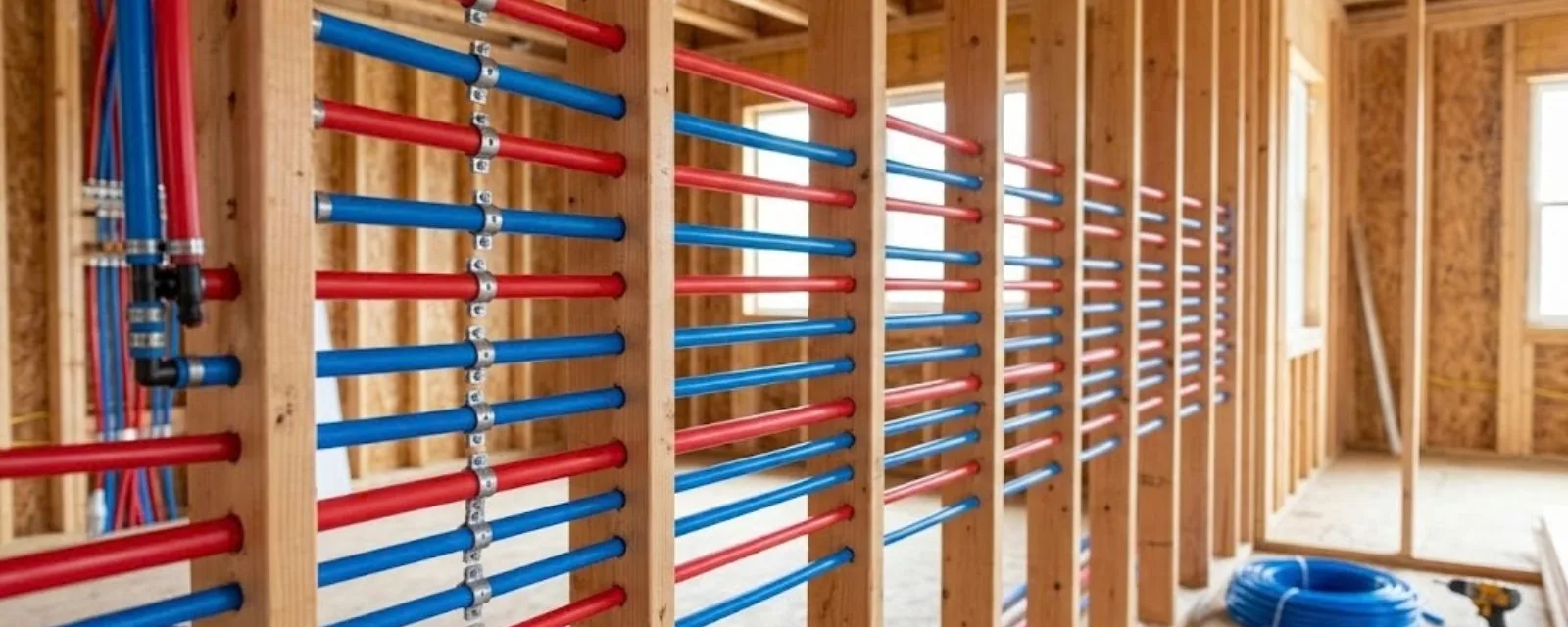
The difference between slab leak repair and repiping is scope. A slab leak repair fixes the one place a line has failed. Repiping replaces the supply lines through the house, so the old pipe that is left behind stops being a worry.
The right answer depends on three things: how many leaks you have had, what the pipe is made of and how old it is, and how much disruption to walls and floors you can live with. This post walks through each, so the conversation with a plumber is about facts and not pressure.
One leak or a pattern of leaks
A single leak in a pipe that is otherwise in decent shape is the textbook case for spot repair. The cause may be a nail, a rubbed joint or a bad fitting from the original build. Fix that spot and the rest of the system can run for years.
A second leak a few months later, in a different place, is a different story. It tells you the pipe is failing as a system, not at one point. Cutting the slab for the third and fourth time costs more in total than a planned replacement, and each patch adds more concrete seams under your flooring.
Count your history honestly. Ask the plumber to record where each leak was and what the pipe looked like nearby. Pinholes on several sections of copper, or cracked fittings throughout, point toward repiping.
A decision table: repair or repipe
Match your situation to the row that fits best.
| Your situation | Leans toward | Why |
|---|---|---|
| First leak, pipe in good shape, location exact | Spot repair | The fix is small and targeted |
| Second or third leak in a few years | Repipe or reroute | Pattern suggests the pipe is failing broadly |
| Gray plastic supply pipe from the late 1970s to mid 1990s | Inspection, likely repipe | Polybutylene is known for failures at fittings |
| Hard-to-reach line under the slab keeps leaking | Reroute | New line avoids repeated concrete cuts |
| Small pinholes, otherwise open copper | Epoxy lining or repair | Interior coating can seal small leaks |
| Selling soon, one leak, documented repair | Spot repair | Fix the known problem and keep records |
Pipe material and age matter more than the leak itself
Polybutylene supply pipe was widely installed in homes from roughly 1978 to 1995, and it is known for failing at its fittings. If your house falls in that range and you see gray plastic pipe at the water heater or under sinks, have a plumber inspect it before you spend money on a single spot repair. A repair on a system with that pipe throughout may only delay the next failure.
Copper is more forgiving, but it can develop pinholes and fitting leaks with age. Newer flexible plastic such as PEX has different failure points, usually fittings and where it contacts sharp edges. The plumber should tell you what they find, show you, and explain what condition the remaining lines are in.
Age alone does not condemn a pipe. A 40-year-old copper system that has leaked once is not the same as a 30-year-old system that has leaked five times. Let the pattern guide the decision.
Ready to book?Call and we will find the earliest slot, often the same day when the schedule allows.
Call (855) 575-2890What drives the cost on each path
Neither option has a single price. These are the pieces that move the number.
- Scope of the work
- Spot repair opens a small area. Repiping touches many rooms, so labor and material both grow.
- Home size and layout
- More bathrooms, fixtures and long runs mean more pipe and more connections.
- Access
- Pipes in open attic or wall cavities are easier to replace than those buried in concrete.
- Finish repair
- Drywall patching, painting and flooring replacement are often priced separately from plumbing.
- Permits and inspection
- Ask the City of Hanahan Building and Codes department whether the work needs a permit.
Insurance often covers sudden water damage but not the pipe repair itself or wear over time. Ask your carrier whether a repipe or a leak repair is eligible, and document everything before work begins.
Call and ask for a written price for both options so you can compare scope side by side.
Disruption to your drywall and floors
Spot repair means a jackhammered or cut square of slab, usually a few feet wide, plus whatever flooring sits on top. The disruption is concentrated and the repair is quick, but the flooring replacement can cost as much as the plumbing.
Repiping spreads the disruption through the house. Plumbers cut access holes in drywall near fixtures, run new lines through attic and wall cavities, and patch afterward. Our repiping service covers the whole-house case, and you should ask how patches will be finished and who handles painting.
A reroute splits the difference. It leaves the slab alone but adds new pipes overhead or in walls, so you accept some drywall work to avoid concrete work. For tile floors or finished rooms, that trade is often worth it.
How to decide, in order
Work through these in sequence before signing anything.
- 1
Confirm the leak
Run a meter test with all fixtures off. A moving meter means water is leaving your plumbing.
- 2
Locate it
Ask for leak detection so the leak is pinpointed before any floor is cut.
- 3
Check the pipe
Look at material and condition near the leak and at accessible points like the water heater.
- 4
Compare options in writing
Get scope, flooring and drywall treatment, and permits listed for both repair and replacement.
- 5
Choose by pattern
One leak in sound pipe favors repair, and repeated leaks in aging pipe favor replacement.
When this becomes an emergency
If a line is spraying, a ceiling is dripping or the floor is flooding, close the main water valve. If you can reach the panel while standing on dry ground, switch off the breakers for wet areas. If not, stay out and call 911 or the electric utility. Then call for emergency slab leak repair. The repair-or-repipe discussion can wait until the water is off and the damage is controlled.
Homeowners in Goose Creek and North Charleston can call about this too. Stop the water first, then decide the long-term fix with the line exposed and the cause known.
Hanahan local note: many homes are now 45 to 55 years old
The SC Encyclopedia shows Hanahan growing from 8,376 residents in 1970 to 13,224 in 1980. A lot of homes here come from that building wave, and many are now roughly 45 to 55 years old.
That age range overlaps the polybutylene era, so it is worth asking whether your supply lines were replaced at some point. Every house is different, since some homes have been repiped and others have original lines. Look at the pipe near your water heater or under a sink and ask a plumber to identify it.
The practical takeaway is simple. If your house is from that 1970s growth period and has had more than one leak, treat the repair-or-repipe question as a system question and not a single-spot one.
- Sources checked (State encyclopedia (population figures), General trade knowledge (polybutylene era), City of Hanahan Building and Codes (permits, ask))
- SC Encyclopedia, Hanahan
- City of Hanahan
Frequently asked questions
Is repiping always more expensive than repairing a slab leak?
In total price, usually yes. Over the life of a failing system, repeated slab repairs plus flooring replacement can add up, which is why the pattern of leaks matters as much as the first quote.
Can I repipe just part of the house?
Yes. Partial repiping or rerouting a single bad line is common. The plumber should explain which sections stay and how the new pipe connects to old pipe.
How long does a repipe take?
It depends on house size and access, so ask the plumber for a schedule in writing. Your water is off for part of that time, so plan for it.
Does a spot repair void any warranty?
Ask for the repair terms in writing, and keep records of the work. A written scope also helps if you sell the house.
My Hanahan home is from the 1970s. Should I assume it needs repiping?
No. Many homes from that period have copper or have been updated. Have the pipe identified and judge by material, condition and leak history, not by age alone.