
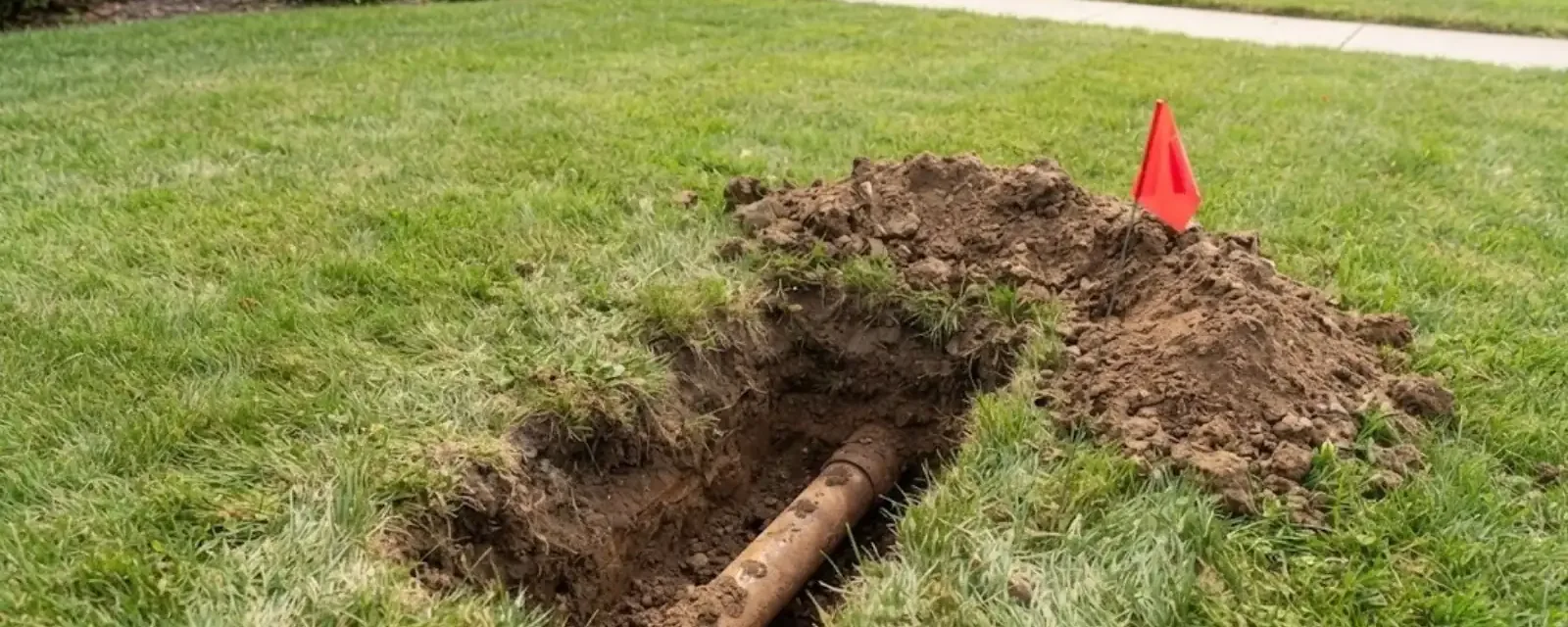
Pipe lining is a repair that builds a new pipe inside an old one. A plumber soaks a felt or fiberglass sleeve in resin, pulls it into the damaged drain or sewer line, presses it against the walls, and cures it until it turns hard. The trade name is cured-in-place pipe, usually shortened to CIPP.
Lining fits some pipes very well and others not at all. A cast iron line with a crack or heavy scaling is often a good candidate. A pipe that has collapsed, or one that sags and holds water, is not. That is why every honest conversation about lining starts with a camera, and why this guide spends as much time on the limits as on the process.
Signs a drain line needs more than another cleaning
A single slow sink is usually a clog in that fixture's own trap or branch. The picture changes when several fixtures slow down together, when a tub gurgles as the washing machine drains, or when the same backup returns a few weeks after a cleaning. Those patterns point to the main line that carries everything out of the house.
Outdoor signs matter too. A soggy patch of lawn with no rain, a sewage smell near a cleanout, or a dip in the yard along the line can mean the pipe is cracked or has separated at a joint. Tree roots find those small openings and keep growing through them, which is why a line that was cleaned out last spring can fill again by fall.
How a liner goes in, step by step
The sequence is similar from job to job, though equipment varies.
- 1
Camera inspection
A camera on a push cable travels the line and records the pipe condition, the depth of problems, and the location of bends and connections. Without this video there is nothing to base a decision on.
- 2
Cleaning the pipe
Roots, scale and grease come out first, using cutters or high-pressure water. A liner cannot bond to a dirty wall.
- 3
Wetting out the liner
The felt or fiberglass sleeve is saturated with epoxy or polyester resin and sized to the pipe diameter.
- 4
Insertion and inflation
The sleeve is pulled or turned inside out into the pipe, then inflated with air or water pressure so it presses tight to the old wall around every bend it can follow.
- 5
Curing
Heat, light or time hardens the resin. The cure method decides how long the line is out of service and how the installer checks the result.
- 6
Reopening and a final camera pass
Branch connections are cut open from inside, and the camera runs again to confirm a smooth, sealed pipe. Ask for this second recording. It is your proof the work was done.
Cure methods: hot water, steam, light and ambient
Hot water curing circulates heated water through the inflated liner until the resin sets. Steam curing does the same job with steam, and it is common on larger runs. Both need a heat source on site, which is why equipment trucks show up for a lining job.
Ultraviolet curing pulls a train of lights through the liner instead. An EPA white paper on pipe rehabilitation describes UV curing as a method that avoids the need for large boilers or steam generators. Ambient curing lets the resin harden on its own at pipe temperature, and it suits shorter, smaller residential runs where time is available.
You do not need to pick the method, but ask which one the installer plans to use and how they confirm the pipe cured. The same EPA paper notes that some installed liners reached only 60 to 90 percent of the strength specified in their contracts. A recorded camera pass and a written product description are reasonable things to ask for.
Ready to book?Call and we will find the earliest slot, often the same day when the schedule allows.
Call (855) 575-2890When lining does not work
A collapsed pipe cannot take a liner. If the camera hits a section that has caved in, filled with soil, or crushed flat, there is no open channel to pull a sleeve through. The same goes for a severe offset, where one pipe section has shifted sideways so far that the sleeve cannot make the step.
Bellies are the other big limit. A belly is a low spot where the pipe has settled and water pools instead of flowing out. A liner follows the shape of the old pipe, so it makes that sag watertight but does not fix the slope. Waste still collects in the dip, and the line can keep backing up even though the walls are sealed.
Lining versus dig-and-replace
Confirm this against your own camera footage.
| Question | Pipe lining | Dig and replace |
|---|---|---|
| Best fit | Cracks, joint leaks, root entry, corroded cast iron with a clear channel | Collapsed pipe, deep belly, severe offset, missing sections |
| Yard, driveway and slab disruption | Usually one or two access points | A trench along the full route, or slab cutting indoors |
| Fixes poor slope | No, follows the existing pipe shape | Yes, new pipe can be laid to proper grade |
| Pipe diameter afterward | Slightly smaller inside because of liner wall thickness | Same or larger, your choice |
| Root resistance | Seals joints and cracks that roots used | New joints are sealed, but roots can still seek them over time |
| Permits and inspection | Ask the City of Hanahan Building and Codes department | Ask the City of Hanahan Building and Codes department |
| Main cost drivers | Length, diameter, cleaning needed, bends, connections, access | Depth, length, surface restoration, utilities in the way, slab work |
Two pipes of the same age can land on opposite sides of this chart.
Why the camera comes first
Lining is a fix for a specific kind of damage, so the damage has to be seen before it is repaired. A camera inspection tells you the pipe material, the number and angle of bends, where the problem sits, and whether anything blocks the channel. It also shows whether a belly or offset rules lining out.
Ask for the recording, not a verbal summary, so you can get a second opinion and compare it with the after pass. If your concern is mainly about a house you are buying or selling, a sewer camera inspection is the starting point, and the same footage is what a lining decision rests on.
Hydro jetting can clear grease and scale before a camera pass, and it is often the prep step before a liner goes in.
What affects the price of pipe lining
A plumber should explain these before giving a number.
- Length and diameter
- More footage and a wider pipe mean more material, more resin and more time on site.
- Prep work
- A line packed with roots or scale needs cleaning first, and that adds labor before any liner goes in.
- Bends and connections
- Each fitting and branch needs the liner to conform around it and then be cut open from inside.
Homeowners insurance often excludes gradual wear and tree-root damage to old pipes, but may respond to sudden covered damage. Ask your carrier before work begins.
Call for a clear price in writing before any lining work starts.
When this becomes an emergency
If sewage is coming up through a floor drain or tub, stop running water in the house, keep children and pets out of the area, and call. A fully blocked main is an emergency, and it needs a sewer line repair or clearing visit rather than a lining quote, since lining planning comes after the line is open and recorded.
Homeowners in Goose Creek and North Charleston can call us for this too. If a line is blocked right now, call our drain cleaning team, and we can discuss clearing the line and running the camera.
Hanahan local note: homes now 45 to 55 years old
The SC Encyclopedia shows Hanahan growing from 8,376 residents in 1970 to 13,224 in 1980. That jump means a lot of the housing here was built in the 1970s, and many of those drain lines are now roughly 45 to 55 years old.
A drain line that age may be cast iron, clay or an early plastic, and any of them can crack, scale or shift. You cannot tell by looking at the house which one you have. A camera inspection before choosing between lining and replacement shows the pipe material and the damage, so you pay for the repair that matches it.
If your street is served by a county or utility sewer main, ask which agency owns the line and where its responsibility ends. The City of Hanahan Public Works page lists Berkeley County Sanitation for sewer issues, so confirm your street with them before you plan work on the section near the property line.
- Sources checked (State encyclopedia (population figures), City of Hanahan Public Works page, Federal agency white paper (EPA pipe rehabilitation))
- SC Encyclopedia, Hanahan
- City of Hanahan, Public Works, Important Phone Numbers
- EPA, Rehabilitation of Wastewater Collection and Water Distribution Systems (white paper)
Frequently asked questions
How long does a pipe liner last?
Manufacturers describe design lives in decades, but the real figure depends on the resin, the quality of the cure and the condition of the host pipe. Ask the installer for the product's written specification and any warranty terms in writing.
Does lining shrink the pipe?
Slightly, since the liner has wall thickness. Ask the installer to state the finished inside diameter.
Can roots grow through a liner?
A properly cured liner seals the cracks and joints roots use, so growth through the wall is unlikely. The final camera pass checks every junction for gaps.
Why might my Hanahan home need a camera before any lining quote?
Many homes in the area date from the 1970s growth, so drain lines may be 45 to 55 years old and made of different materials. A camera shows which you have and whether a collapse or belly rules lining out.